NEF Reading slide 39 Culture Shock ex-es c,d

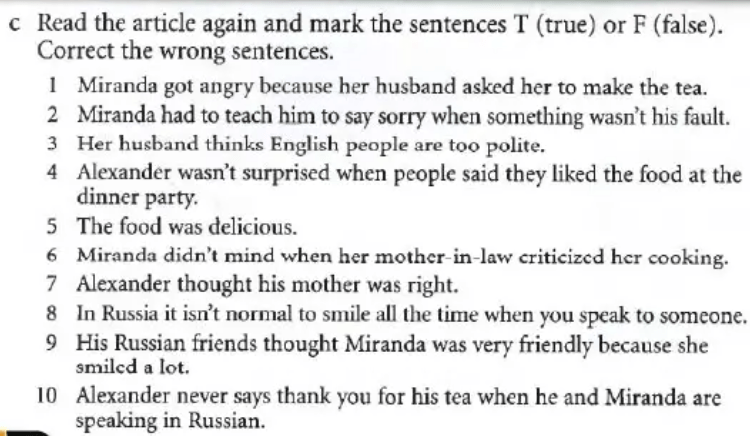
1 — T
2 — T
3 — T
4 — F
5 — F
6 — T
7 — T
8 — T
9 — F
10 — T
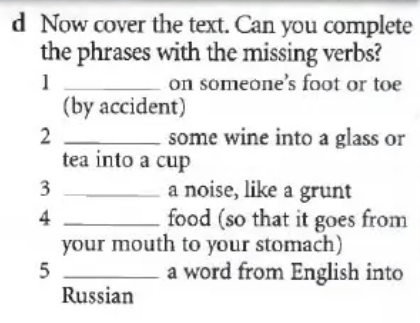
1 — Step
2 — Pour
3 — Make
4 — Swallow
5 — Translate
NEF Reading slide 39 Culture Shock ex-es c,d
1 — T
2 — T
3 — T
4 — F
5 — F
6 — T
7 — T
8 — T
9 — F
10 — T
1 — Step
2 — Pour
3 — Make
4 — Swallow
5 — Translate
Writing Manners around the world/ choose some manners that are used in different countries
How not to behave badly abroad
NEF Grammar 136 3A a/b

1. Don’t have
2. Must
3. Didn’t have
4. Do you have to
5. Had to
6. Did you have to
7. Shouldn’t
8. Mustn’t
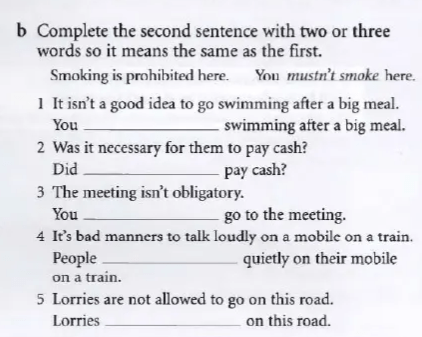
1. Shouldn’t go
2. They have to
3. Don’t have to
4. Must talk
5. Mustn’t go
Japan
Never stick your chopsticks vertically in a bowl of rice in Japan. It’s considered extremely taboo because it reminds people of funerals where a bowl of rice is offered with two chopsticks standing vertically in the center as an offering to the deceased.
Vietnam
It is considered a major cultural mistake not to remove your shoes before entering a home in Vietnam as the interior of a home represents personal space. You have to show respect by leaving your shoes outside the door and make sure your feet are clean.
Greece
Leaving food on your plate in Greece can be seen as an insult to your host as it can imply that you didn’t think the food was appetizing.
Russia
Giving a person yellow flowers in Russia represents hate and is offensive. Yellow flowers are also considered funeral flowers. They only give flowers in odd numbers, an even number of flowers is never given.
India
Indian food is generally meant to be eaten with your fingers and will be served in such a way as to make that convenient for you. Use two fingers and the bread to scoop up liquidy dishes. Make sure to use your right hand when eating as the left is seen as ‘unclean’ and disrespectful.
Morocco
Modesty isn’t just seen as a religious issue but is also a sign of respect and politeness in Morocco. Both genders are generally expected to wear clothing that covers the shoulders and goes to below the knees. Running shorts, sleeveless shirts, and beachwear are only worn when playing sports or at the beach, and if worn at other times are almost tantamount to wearing only your underwear.
China
Gift giving is an important ritual in China, but when you’re picking out a present be sure to avoid any cutting implements. Never give knives, scissors, or any other cutting equipment as gifts because they signal the end of your relationship.
Mexico
Patience is a virtue in Mexico. Mexicans are extremely polite, so losing your temper over delays or complaining loudly will get you branded as rude and make people less inclined to help you.
United Arab Emirates
If you travel to a Muslim country during Ramadan, a Holy month observed by the Muslims all over the world, know that observant people will be fasting from sunup to sundown. It is a very poor manners to eat or drink in front of people who are fasting. This doesn’t mean you don’t need to follow their fast but you should eat your meals where they won’t be bothered by the sight, sound, or smell of you eating.
Japan
Here, as in most countries, you pour your own drink when you’re thirsty. In Japan, this is considered greedy, narcissistic, and even anti-social. In other words, you are being incredibly rude by pouring your beer, wine, or sake into your own glass. Instead, it is proper to pour for other people at the table first, and they will in turn reciprocate the gesture. If you finish your glass before others do, simply top them off, and you will get the same treatment.
NEF Student’s Book Reading Why I didn’t want to be a millionaire slide 36/ write down all the unknown words and learn.
NEF Student’s Book Writing What do you remember? slide 35
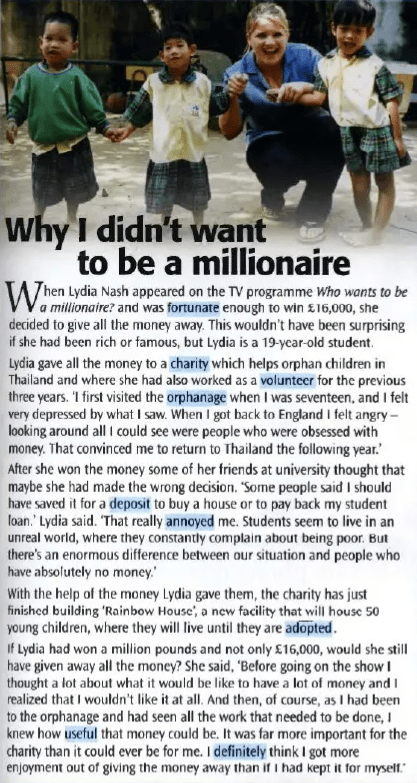
Orphanage — մանկատուն
Deposit — ավանդ
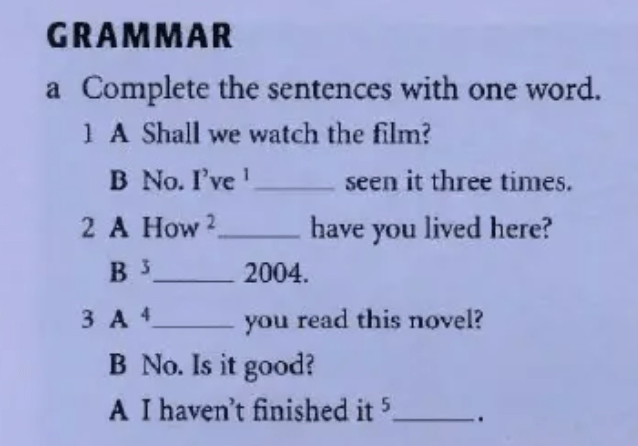
1. already
2. long
3. Since
4. Have
5. yet
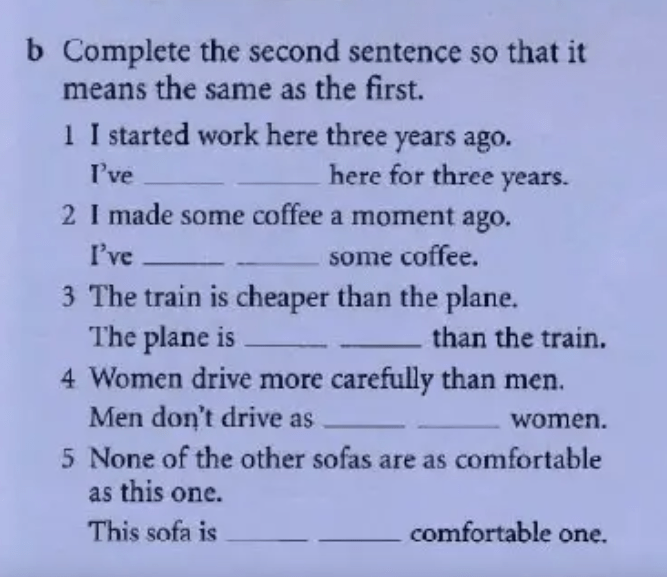
1. been working
2. been making
3. more expensive
4. careful as
5. the most
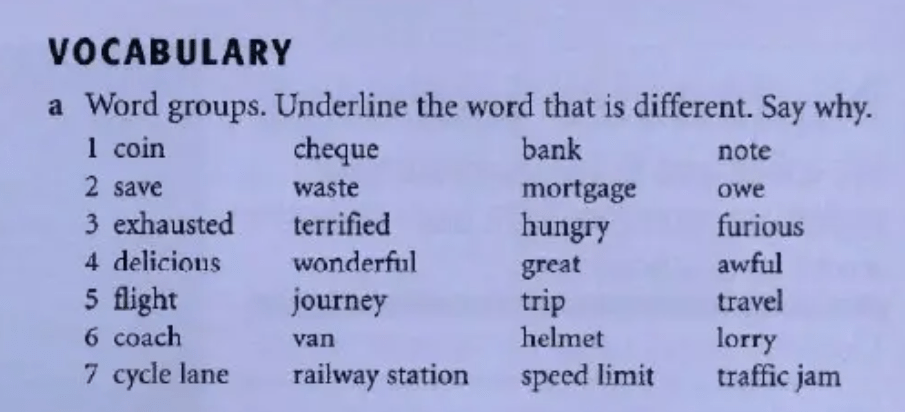
1. Cheque (because all words are connected to money except this one)
2. Mortgage (because all words are about doing something with money except this one)
3. Hungry (because all words are feelings except this one)
4. Awful (because all words are describing something good except this one)
5. Travel (because all words are about nouns except this one)
6.
7. Speed limit

1.
2. tax
3.
4. lend
5.
6. inherit
7.
8. tiny
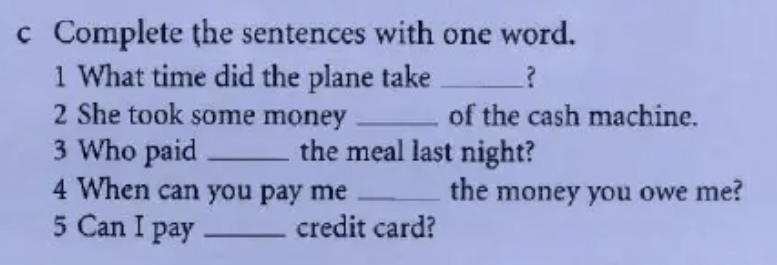
1. off
2. out
3. for
4. back
5. by
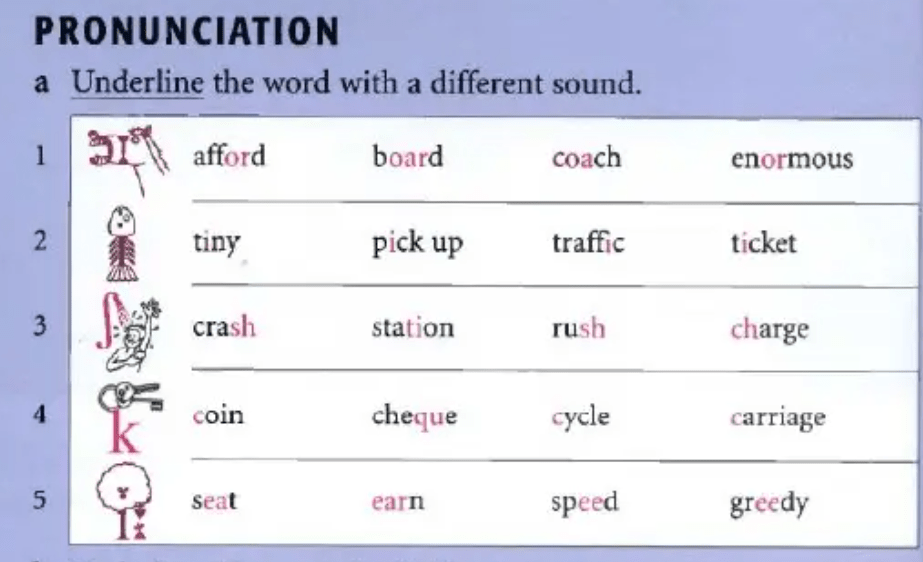
1. enormous
2. tiny
3. charge
4. cycle
5. earn

terrifies
NEF Grammar slide 134 2A a, b, 2B a, b
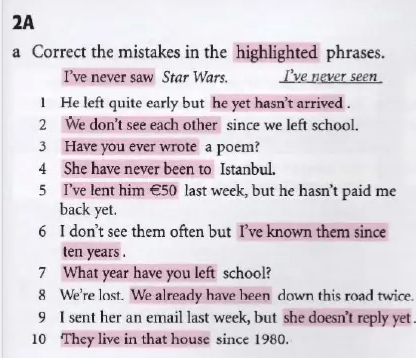
1. He left quite early but he hasn’t arrived yet.
2. We haven’t seen each other since we left school.
3. Have you ever written a poem?
4. She has never been to Istanbul.
5. I lent him €50 last week, but he hasn’t paid me back yet.
6. I don’t see them often but I’ve known them for ten years.
7. What year did you leave school?
8. We’re lost. We have already been down this road twice.
9. I sent her an email last week, but she hasn’t replied yet.
10. They have been living in that house since 1980.
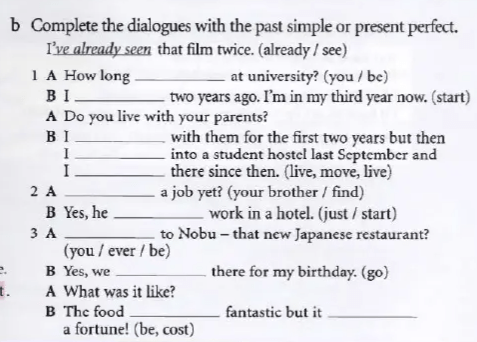
1. A How long have you been at university.
B I started two years ago. I’m in my third year now.
A Do you live with your parents?
B I have lived with them for the first two years but then I moved into a student hostel last September and I am living there since then.
2. A Has your brother found a job yet?
B Yes, he just started to work in a hotel.
3. A Have you ever been to Nobu — that new Japanese restaurant?
B Yes, we went there for my birthday.
A What was it like?
B The food was fantastic but it cost a fortune!
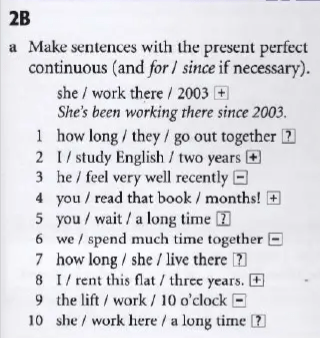
1. How long have they been going out together?
2. I have been studying English for two years.
3. He hadn’t been feeling very well recently.
4. You have been reading that book for months!
5. Have you been waiting for a long time?
6. We haven’t spent much time together.
7. How long has she been living there?
8. I have been renting this flat for three years.
9. The lift hasn’t been working since 10 o’clock.
10. Has she been working here for a long time?
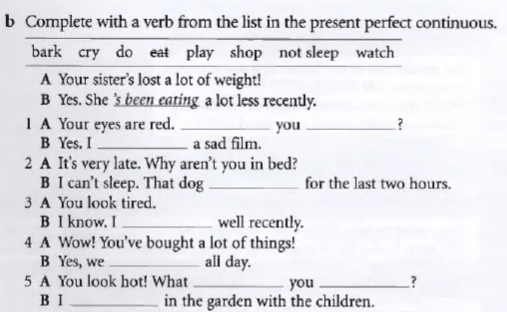
1. A Your eyes are red. Have you been crying?
B Yes. I’ve been watching a sad film.
2. A It’s very late. Why aren’t you in bed?
B I can’t sleep. That dog has been barking for the last two hours.
3. A You look tired.
B I know. I haven’t been sleeping well recently.
4. A Wow! You’ve bought a lot of things!
B Yes, we had been shopping all day.
5. A You look hot! What have you been doing?
B I have been playing in the garden with the children.
NEF Student’s Book Changing your life Reading It was just a holiday, but it changed my life slide 27 /read the text and write down all the unknown words/
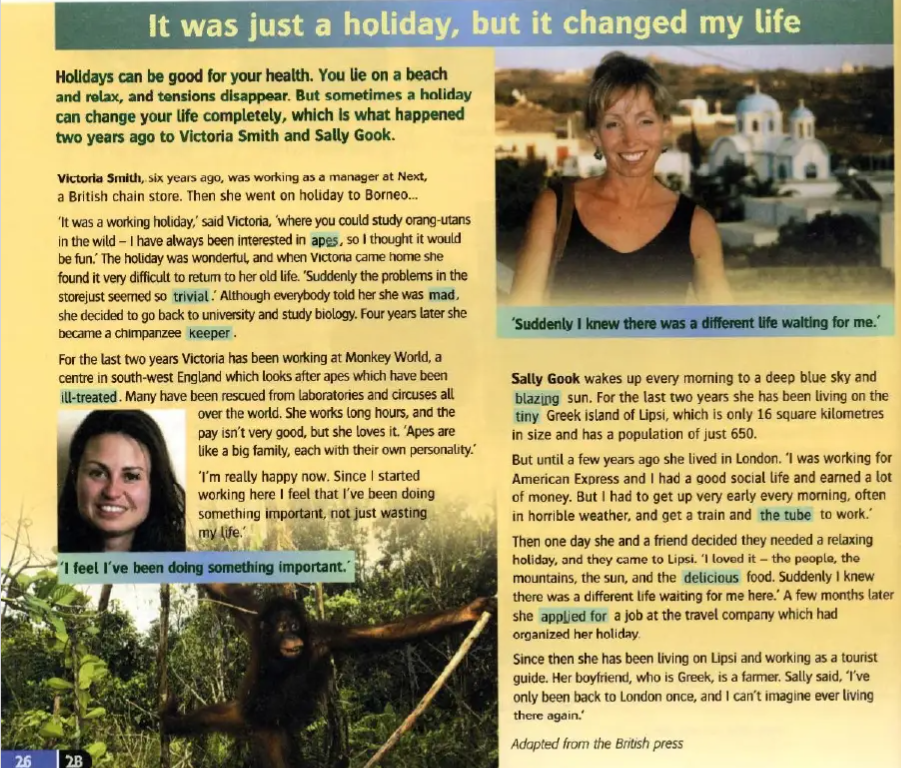
Apes — կապիկներ
Trivial — Չնչին
Keeper — պահապան
Ill-treated — դաժան վերաբերմունք
Blazing — բոցավառվող
The tube — խողովակ
Writing. Choose one topic and write an essay
Money makes the world go round.
All I want is enough money to enjoy life
Can money buy happiness or not?
Opinion on the importance of money
Money as a form of motivation
Why money is important?
Can money buy happiness or not?
Nowadays money is very important. It can change everything in our lives, and also can bring you some kind of happiness. For example, imagine if your parents or someone close had problems with money, but needed it a lot, so you decide to help them and give some money. You will bring so much joy and happiness in that person’s life, and that brings happiness to you, too. Or another example is when you were working a lot to earn some money to have your dream life, isn’t it happiness? I think it is. But there is also a bad thing in money. If you’re addicted to it, you can’t see other things in life expect of money. That’s really very bad. Also you can loose everything because of it.
So I think that money can buy happiness, but not always.
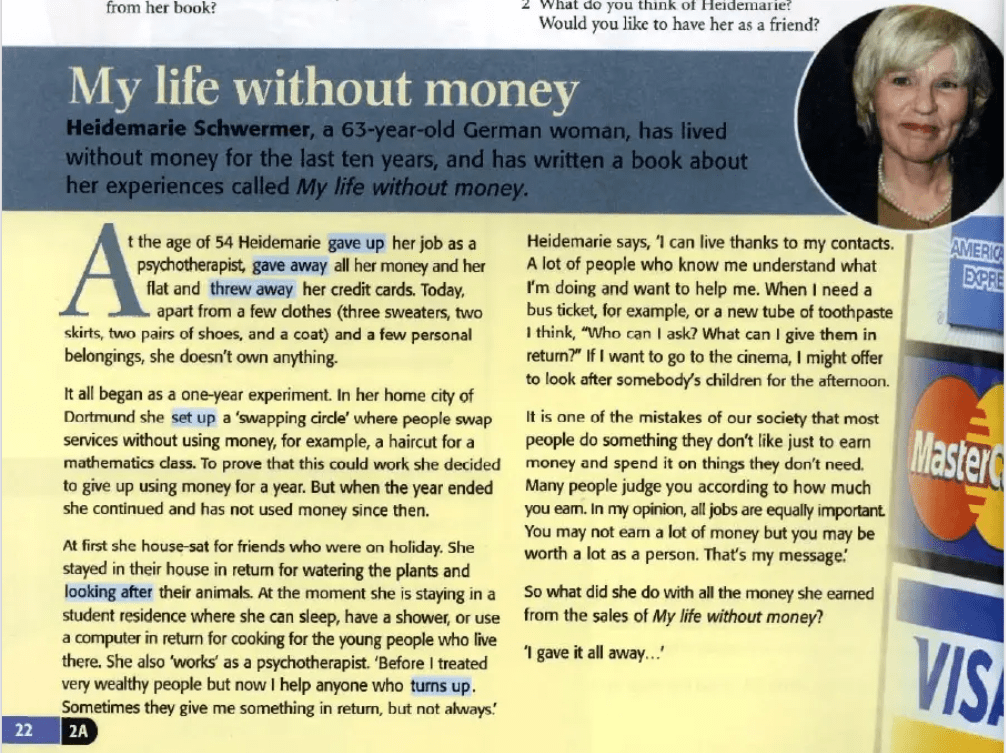
NEF Student’s Book Reading My life without money slide 23/ read the text, write down all the unknown words and be ready to retell the text.
NEF Student’s book Vocabulary Money slide 148 ex-es 1,2,3
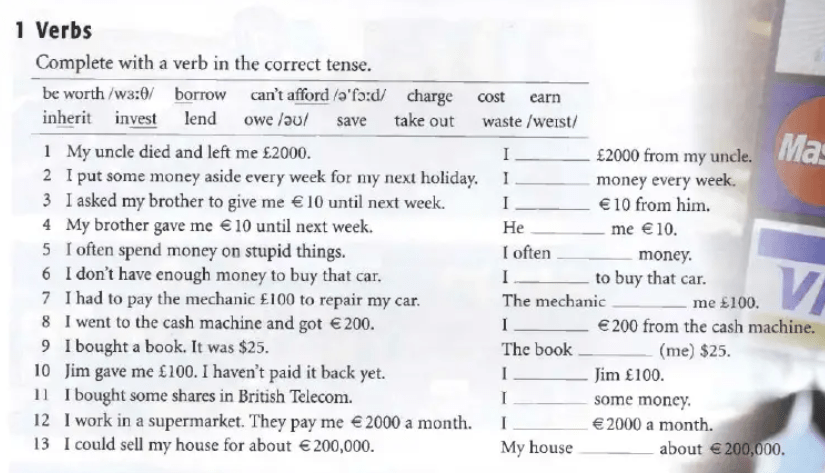
1. Inherited
2. Save
3. Borrowed
4. Lent
5. Waste
6. Can’t afford
7. Charged
8. Took out
9. Cost
10. Owe
11. Invested
12. Earn
13. Is worth
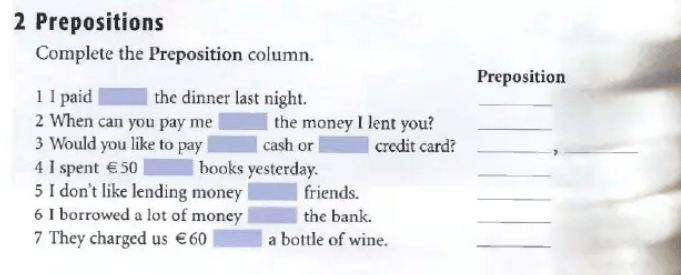
1. For
2. Back
3. In, by
4. On
5. To
6. From
7. For

1. Note
2. Coin
3. Salary
4. Tax
5. Loan
6. Mortgage
7. Cash machine
NEF Student’s Book What do you remember? slide 19
NEF Student’s Book Reading Jam today, tomorrow, and yesterday, Read the text and mark the sentences (T), (False), or DS (doesn’t say) slide 20
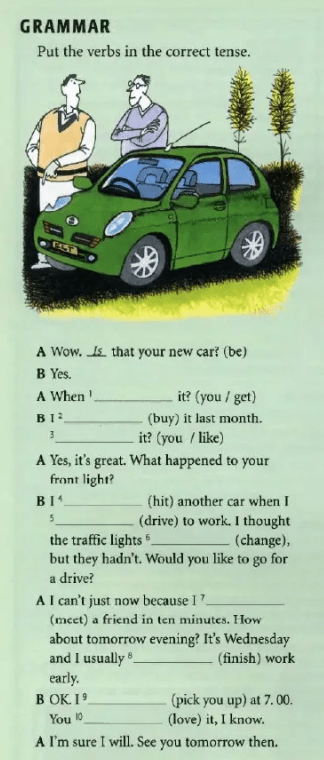
1. Did you get
2. Bought
3. Do you like
4. Hit
5. Was driving
6. Had changed
7. Am meeting
8. Finish
9. Will pick you up
10. Will love
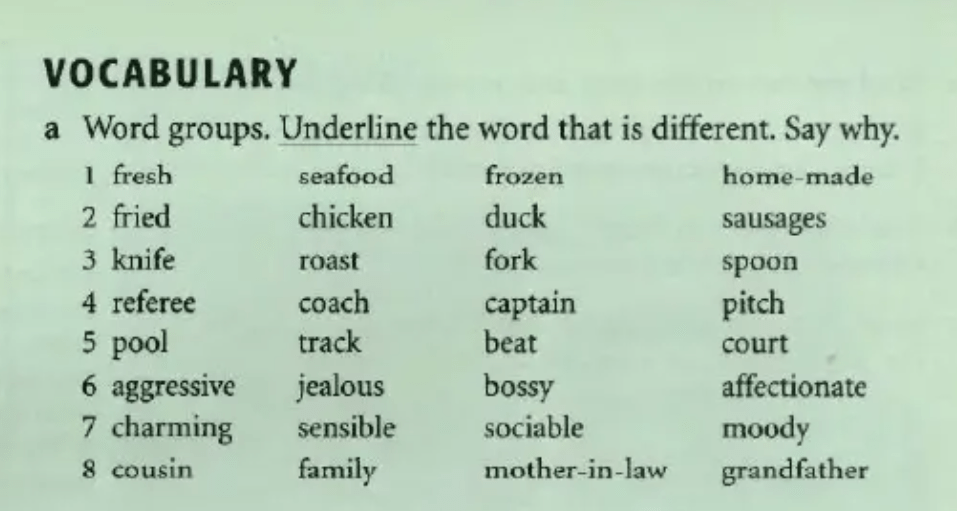
1. Seafood (because all words are about food condition except this)
2. Fried (because all words are food except this)
3. Roast (because all words are kitchen utensils except this)
4. Pitch (because all words are persons except this)
5. Beat (because all words are about sport except this)
6. Affectionate (because all words are bad feelings except this)
7. Moody (because all words are good except this)
8. Mother-in-law (because all words are blood relatives except this)
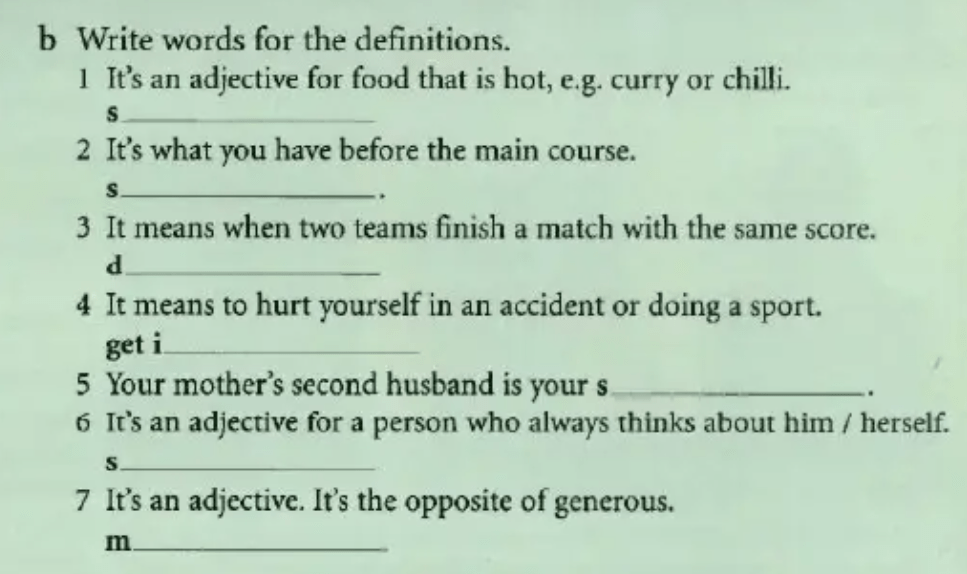
1. Spicy
2. Salad
3. Draw
4. Injured
5. Step father
6. Selfish
7. Mean
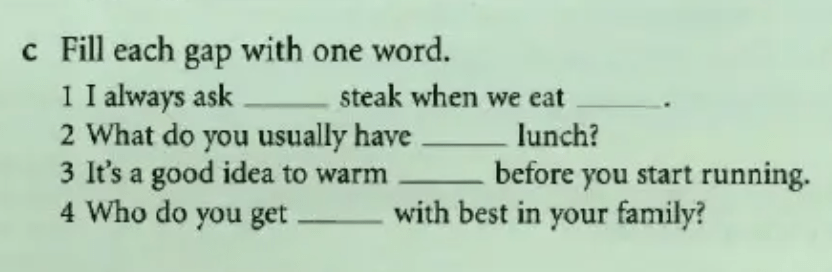
1. For a, out
2. For
3. Up
4. On
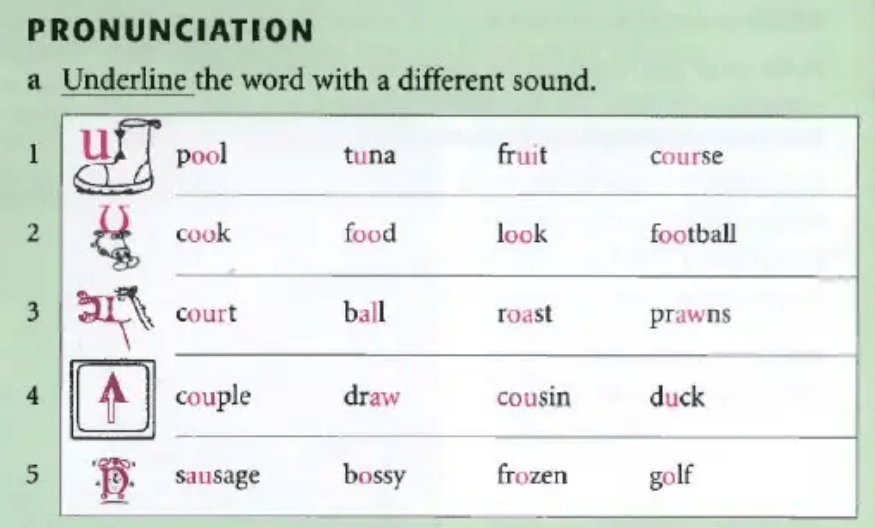
1. Course
2. Cook
3. Ball
4. Draw
5. Golf

Impatient
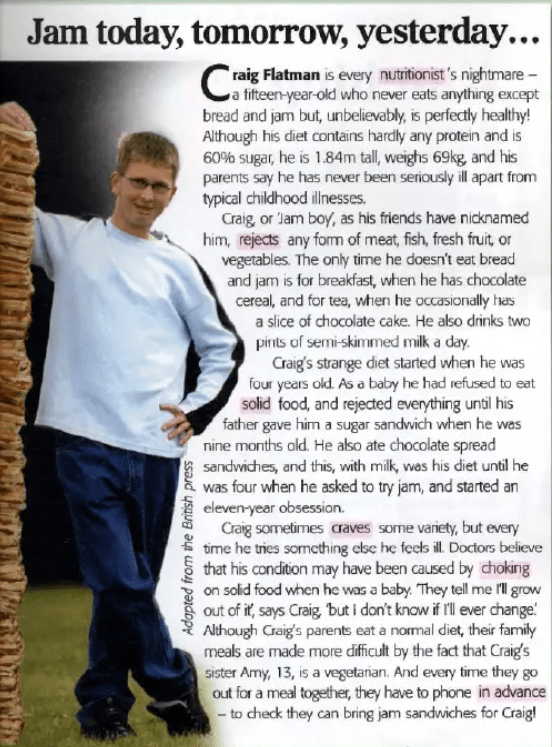
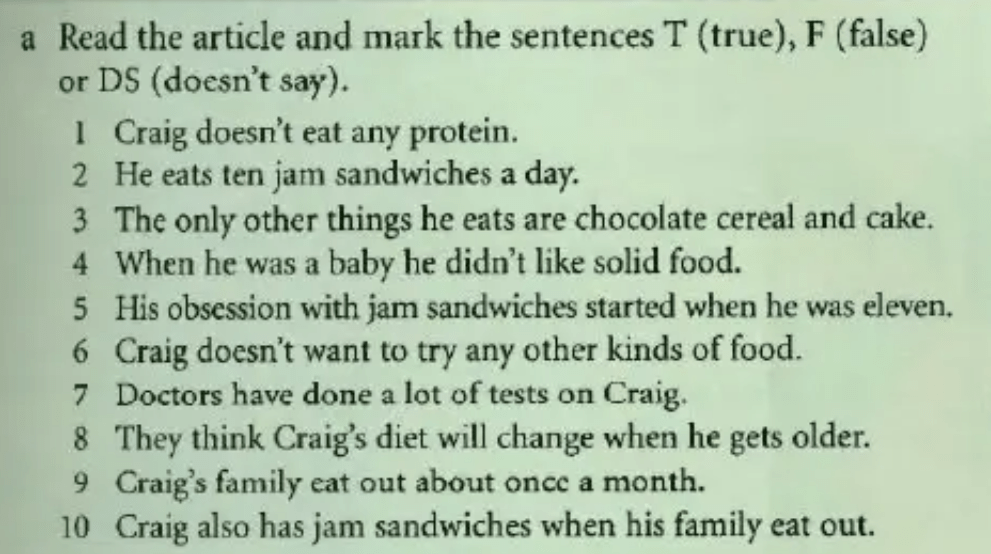
1. F
2. DS
3. T
4. T
5. F
6. DS
7. DS
8. T
9. DS
10. T
Writing An email to my friend/ write a letter to your friend according to the model on slide 18 in NEF Student’s book, make sure you follow the rule of letter writing.
Hi Emily,
Thank you for your email. Of course, I can tell you about Gohar. She’s 13, but in a few days, she’ll turn 14. She studies in the same school and in the same class as me.
She’s quite friendly. She has a little brother and also a little cousin, with whom she likes to spend time and loves a lot. Also, Gohar likes to spend time with all her family. She is really responsible and always does what she promises to do. She is clever, hard-working, and wants to focus on studying. She likes listening to music and watching some series, but not very often. She wants to be a doctor.
I think her negative sides are ignoring, and not doing what she doesn’t want but has to. I think that’s all.
I hope this is useful.
Love, Nane
 Նանե Խաչատրյան