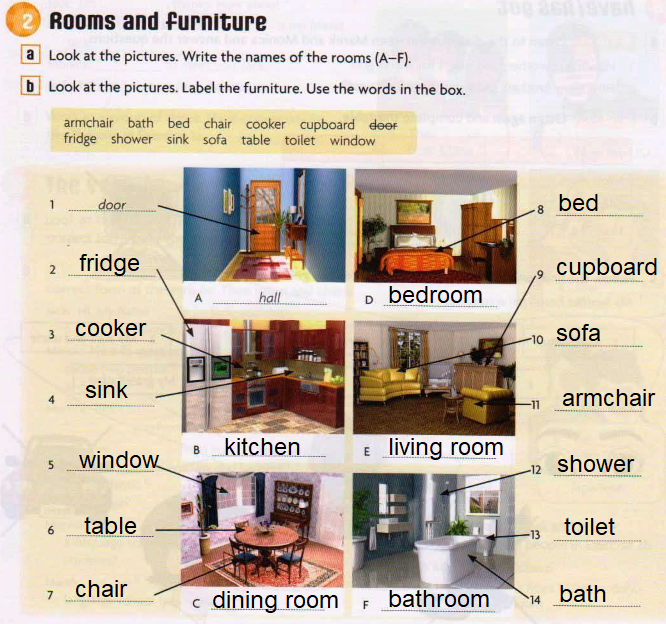
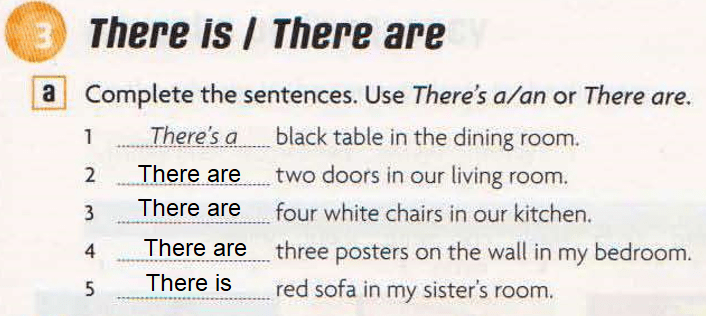
In my room near the door there is a little windowsill and in this windowsill there live my fishes. In the right side of my room there is my and my brother’s bed. Our bed is bunk. In the left side of my room there is big wardrobe. In my room there are posters. When we enter my room we see window. In my room there is a door that goes to my parent’s room.
When we enter the flat there is a bathroom on the right side. Then we enter the hall and there is a living room. On the left side there is my parent’s bedroom, and after it there is my and my brother’s bedroom. Return to the living room. On the right side we will see my grandmother’s and grand-grandmother’s bedroom. Living room opens into the kitchen, dining room and balcony.
SEPTEMBER 15-25 WHAT ARE YOUR DREAMS TRYING TO TELL YOU?
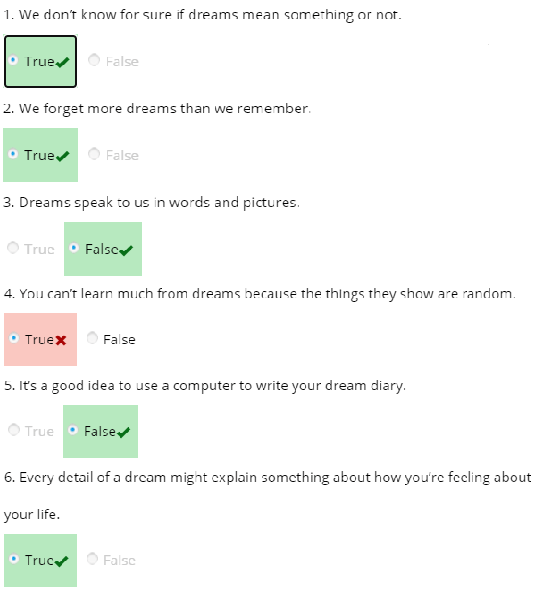
Can you remember a time when you woke up from a fantastic or strange dream? Maybe you were afraid and turned on the light or the dream was so good you wanted to sleep longer. But do you think your dreams are telling you something?
CAN YOU SEE THE FUTURE IN DREAMS?
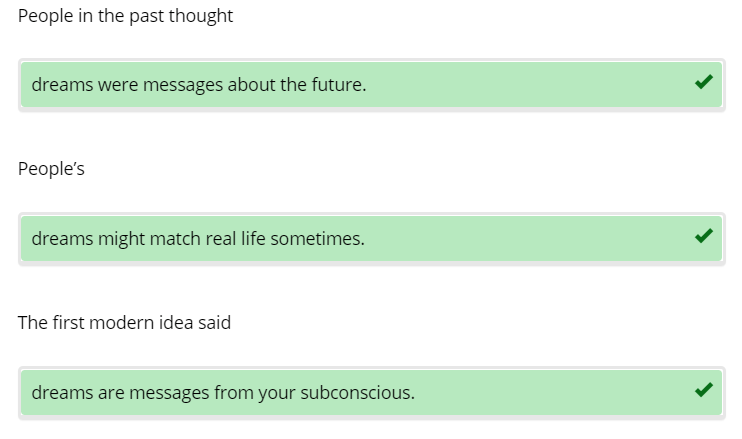
For hundreds of years, people thought dreams were messages from gods or spirits. Today, too, many people can remember a time when they saw a place or person in their dream and then, later, the dream happened in real life. Maybe that’s not surprising because we dream a lot but we probably only remember the times when something happens in a dream and then happens for real. Most people have four to six dreams every night after the age of ten. That’s as many as 2,000 dreams per year. So, an 80-year-old person has probably had 140,000 dreams. Maybe we forget 95–99 per cent of our dreams, but that’s still thousands of dreams that might ‘come true’.
ARE DREAMS RECYCLED THOUGHTS?
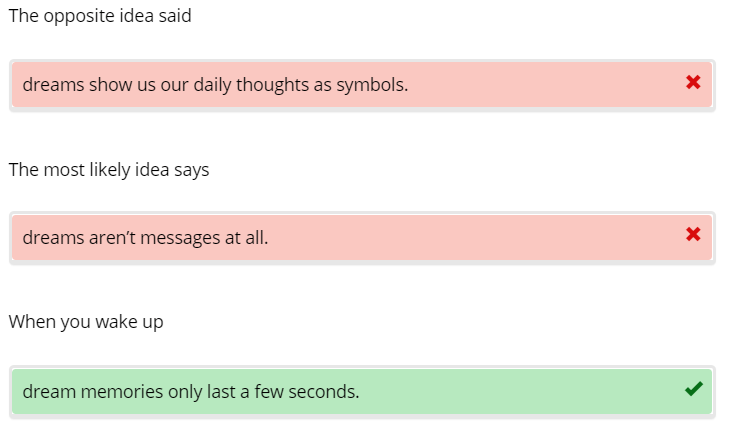
Around the 18th and 19th centuries, there were two popular ideas about dreams. One said that the things we see in our dreams are things we keep in our subconscious because we don’t want or need to think about them when we’re awake. The opposite idea said that while we’re sleeping, the brain organises memories and thoughts from the day. Dreams are just random thoughts from our day but we try to make a story from them when we wake up.
ARE DREAMS MESSAGES FROM OUR BRAINS?
But perhaps both ideas are a little bit right. Maybe dreams are made from the thoughts we have during the day, but we see them as symbols. For example, a dream of flying might be a symbol for an exciting new job. When we’re awake, we think in words most of the time. But when we’re sleeping, the part of our brain that helps us with language sleeps, and the part that makes us happy or sad or angry is awake and busy. So, maybe our thoughts come to us in dreams as feelings and symbols instead of words. If you can understand these symbols, you have a window into your subconscious. If you want to understand the messages, you have to match them to what’s happening in your life.
HOW CAN YOU UNDERSTAND THE MESSAGES?
One way to help you do this is to keep a dream diary. As soon as you wake up, write down everything you remember about your dreams. Use pen and paper, not your phone or computer because the light might wake you up and you’ll forget faster. Sometimes your eyes will be half-closed and your writing will be difficult to read.
Now you can match your dreams to your daily life. Think about the people and place where the dream happened, as they might mean something too. Also, how you were feeling in the dream is important. If you were afraid instead of happy in the flying dream, maybe it means you are worried about the new job. Are you ready to find out what your subconscious is trying to tell you?
When we enter the flat there is a bathroom on the right side. Then we enter the hall and there is a living room. On the left side there is my parent’s bedroom, and after it there is my and my brother’s bedroom. Return to the living room. On the right side we will see my grandmother’s and grand-grandmother’s bedroom. Living room opens into the kitchen, dining room and balcony.
Martha is at the grocery store, getting ready for a house party. She has a list of what she needs with her as she goes along. The first section she comes has produce. Martha sees apples, bananas, cherries, grapes, and strawberries. She checks her list:
– 6 apples
– 1 bag of cherries
– 1 bag of grapes
– 2 cartons of strawberries
Easter or “Zatik” in Armenia is one of the most colorful, joyful celebrations of the year.
Easter falls on Sunday, April 12, 2020. Easter is celebrated on the Sunday following the first full moon.
Speaking about the traditional Easter food in Armenia we should mention that Armenian women bake a cake with white flavoring, which symbolizes purity, make fried fish, herbs of different kinds, boil and paint eggs in different colors, rice with raisins and what not.
What are your family Easter traditions?
HOW DOES YOUR FAMILY CELEBRATE EASTER?
Students will make short videos and tell us how their families celebrate Easter.
There was once a young girl who lived with her father in the city.
The father went away on a business trip. When he came back, the city’s priest, who was a bad man, told him an evil lie about the girl. Though the lie was not true, the father believed the priest and banished the girl to the desert. “Banished” means sent away forever.
In the desert, the girl was adopted (taken care of) by a herd (group) of gazelles. A “gazelle” is a kind of animal similar to a deer or horse. She lived with the gazelles for many years.
One day, a handsome prince came by and saw the girl. The two fell in love and got married. Together, they had a son.
However, the prince’s advisor was jealous of the love between the prince and the girl. Because of this, he stole the baby. The girl was so upset and frightened (scared) that she ran away to a village nearby. There she wore a man’s cloths and found work.
Many years later, the village was holding a hunting competition. The girl’s father, the priest, the prince, and the advisor were all there. The girl recognized them (knew who they were), but they did not recognize her.
At the competition, the girl stood up and told her life story to the crowd.
Everyone immediately recognized her. They understood she was telling the truth! The girl, the prince, and her father were all happily reunited (brought together again). The priest and advisor were banished to prison.
They soon learned that the son who had been stolen was actually living in the village. The girl and her husband, the prince, were then reunited with their son.
The prince was so happy that he passed a law that said that hunters could not hunt (kill) gazelles. From that day on, the gazelles were protected from harm.
EXERCISES
VOCABULARY QUESTIONS
What does “insight” mean?
a) understanding
b) view
c) look at
d) listen to
What does “theme” mean?
a) story
b) idea that repeats itself
c) feature
d) family
What does “banished” mean?
a) brought home
b) found to be lying
c) send away forever
d) found to be telling the truth
GRAMMAR QUESTIONS
From these stories, listeners can learn _________ lot about Morocco.
a) a
b) the
c) an
d) that
Many Moroccan folk stories _________ similar themes.
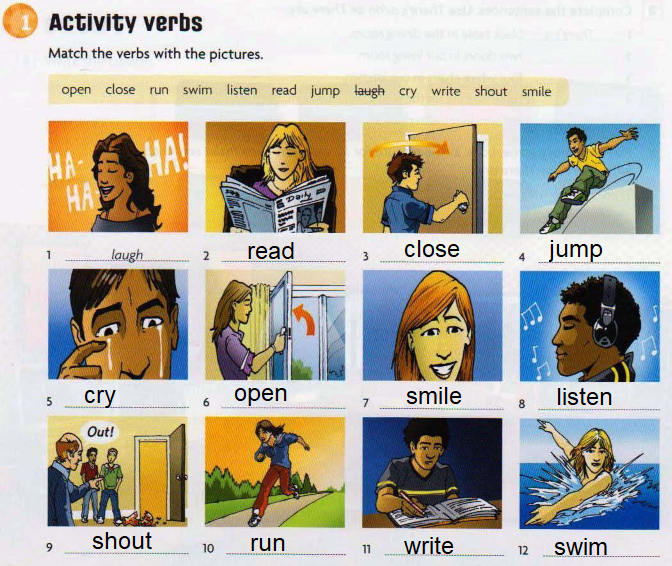
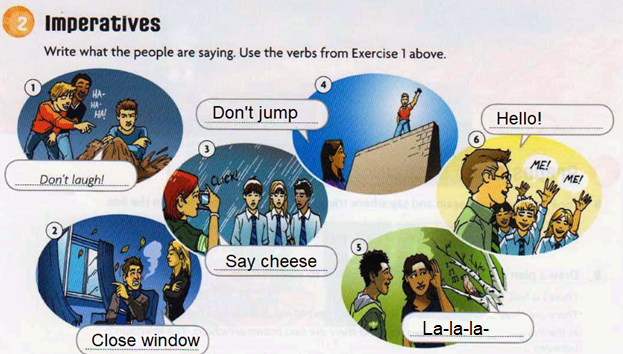
Put the words in brackets into the gaps. Mind the positive or the negative forms.
EXAMPLE:
… your books. (to open)
Open your books
… upstairs. (to go)
Go upstairs.
…. in this lake. (not/to swim)
Don’t swim in this lake.
…. your homework. (to do)
Do your homework.
…. football in the yard. (not/to play)
Don’t play football in the yard.
…. your teeth. (to brush)
Brush your teeth.
…. during the lesson. (not/to talk)
Don’t talk during the lesson.
…. the animals in the zoo. (not/to feed)
Don’t feed the animals in the zoo.
….the instructions. (to read)
Read the instructions.
…. late for school. (not/to be)
Don’t be late for school.
….your mobiles. (to switch off)
Switch off your mobiles.
ADJECTIVE
Fill in the correct form of the words in brackets (comparative or superlative).
My house is (big)biger than yours.
This flower is (beautiful)more beautiful than that one.
This is the (interesting)most interesting book I have ever read.
Non-smokers usually live (long)longer than smokers.
Which is the (dangerous)most dangerous animal in the world?
A holiday by the sea is (good)better than a holiday in the mountains.
It is strange but often a coke is (expensive)more expensive than a beer.
Who is the (rich)richest woman on earth?
The weather this summer is even (bad)worse than last summer.
He was the (clever)cleverest thief of all.
COMPARATIVE – SUPERLATIVE
A rock is … than a leaf. ( heavy)
A rock is heavier than a leaf.
Our house is …than yours. ( big)
Our house is biger than yours.
The princess is ….than the witch. ( beautiful)
The princess is more beautiful than the witch.
Tom is a ….student than Mary. ( good)
Tom is a better student than Mary.
Bicycles are …than motorbikes. ( safe)
Bicycles are safer than motorbikes.
July is ….than January. ( hot)
July is hotter than January.
A lion is ….than a cat. ( dangerous)
A lion is more dangerous than a cat.
Helen is…. than Mary. ( happy)
Helen is happier than Mary.
Fill in the gaps with the superlative form of the adjectives given.
1. It is the … shop in town. (large)
It is the largest shop in town.
2. Monday is the … day of the week. (bad)
Monday is the worst day of the week.
3. Ben was the … person in his family. (noisy)
Ben was the noisiest person in his family.
4. Sam is the … in the class. (popular)
Sam is the most popular in the class.
5. Which is the … subject at school? (difficult)
Which is the most dificult subject at school?
6. Jim is the ….player in the football team. (good)
Jim is the best player in the football team.
7. Elephants are the…. animals. (heavy)
Elephants are the heaviest animals.
8. Let’s pick the … apple of the tree. (big)
Let’s pick the biggest apple of the tree.
9. Mary is the….. girl in the class. (thin)
Mary is the thinest girl in the class.
10. That is the ….. sofa in our house. (comfortable)
That is the most comfortable sofa in our house.
Fill in the gaps with the comparative or the superlative form of the adjectives given.
1. This armchair is more comfortable than the old one. (comfortable)
2. Trains are slower than aeroplanes. (slow)
3. I bought the most expensive souvenir I could afford. (expensive)
4. In this classroom there are more girls than boys. (many)
5. Ann is the youngest child in the family. (young)
6. That TV set is the cheapest of all. (cheap)
7. You are safer here than there. (safe)
8. Fifi is prettier than Kate. (pretty)
9. This is the most exciting film I have ever seen. (exciting)
10. Tim is more talented than Peter. (talented)
Easter or “Zatik” in Armenia is one of the most colorful, joyful celebrations of the year.
Easter falls on Sunday, April 12, 2020. Easter is celebrated on the Sunday following the first full moon.
Speaking about the traditional Easter food in Armenia we should mention that Armenian women bake a cake with white flavoring, which symbolizes purity, make fried fish, herbs of different kinds, boil and paint eggs in different colors, rice with raisins and what not.
What are your family Easter traditions?
HOW DOES YOUR FAMILY CELEBRATE EASTER?
Students will make short videos and tell us how their families celebrate Easter.













 Նանե Խաչատրյան